 hock
 MANIFESTING YOUR
Tech Solutions
When an AI Agent Shops for Your Customer, Can It Find You?
A customer types into ChatGPT: find me a 6-burner gas cooker under ₦600,000 that can be delivered in Abuja this week. The assistant searches, compares and returns three options with links. Your shop has exactly that cooker in stock. It isn't on the list, because nothing on your website told the assistant the price, the stock or the delivery area in a form it could read.
How does AI shopping work today?
OpenAI added product recommendations to ChatGPT in 2025 and launched Instant Checkout that September, built with Stripe on an open standard called the Agentic Commerce Protocol. It has since moved toward checkouts the merchant controls, where ChatGPT recommends the product and the purchase happens on the store's own site. Google, Perplexity and others are building their own shopping features. Whichever platform wins, the recommendation step reads the same things: structured product data, current prices, stock and policies.
What does an agent need from your store?
- Structured product data. Schema markup on every product page with name, brand, price, currency, availability and condition, so a machine reads the facts without guessing from the design.
- A product feed. A clean, current feed of your catalogue, the kind Google Merchant Center accepts, kept in sync with your stock automatically.
- Policies in plain text. Delivery areas, delivery times, returns and payment options written as clear statements an assistant can quote.
- Fast, crawlable pages. Product pages that load without waiting on scripts, and robots rules that don't block the AI crawlers you want.
- An agent interface, if you want to go further. An MCP server or API that lets an assistant check live stock and prices, or start an order, within limits you set.
What to do first
Search for your best-selling product in ChatGPT, Perplexity and Google's AI Mode the way a customer would. If you don't appear, check whether your product pages carry structured data. That's the cheapest fix with the widest effect, and it helps ordinary Google search too.
Built on work I've shipped
This site generates its sitemap, llms.txt and structured data from content at build time so AI answer engines can read it. WeSelling's storefront and inventory run from one stock count, which is what a live product feed needs. I build custom MCP servers that give AI assistants controlled access to business data.
What it costs
- AI Search Optimization (GEO + AEO) from $130 for an audit of your site and of what AI assistants say about you. Structured data comes with the $380 package.
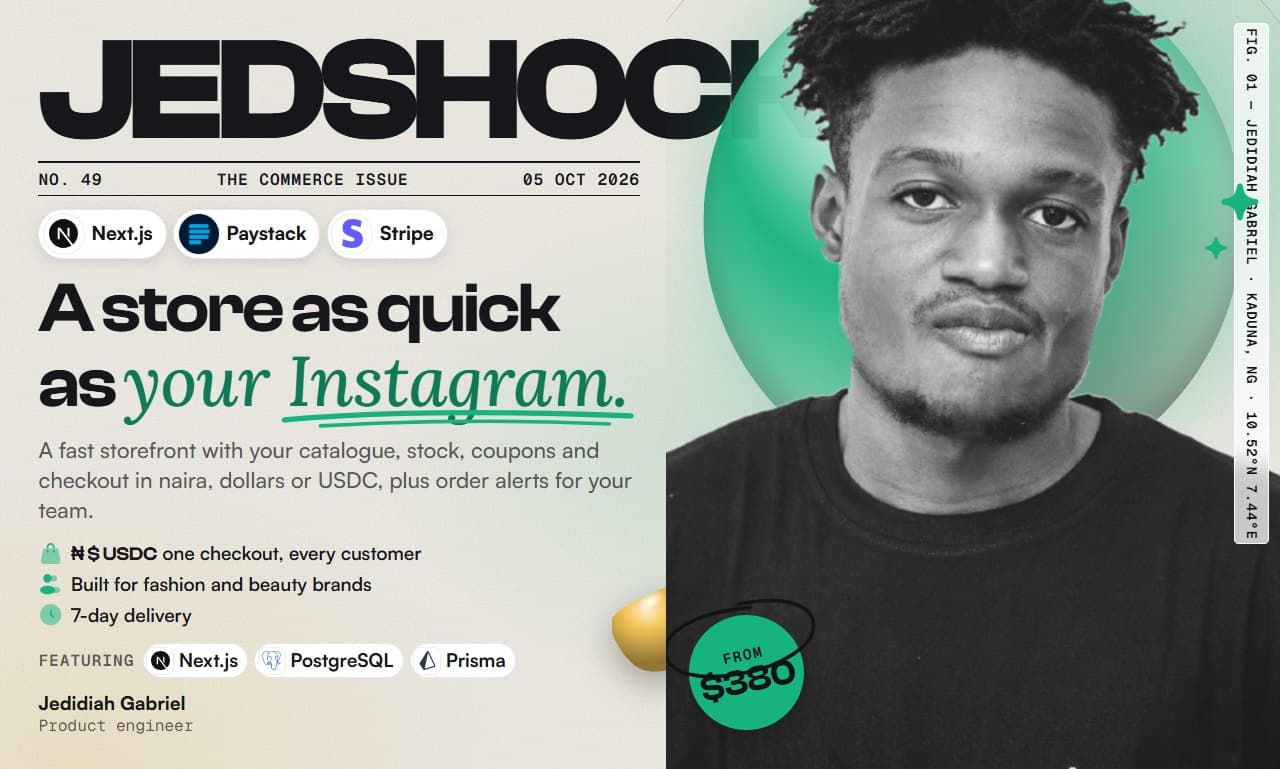
- Next.js Ecommerce Store from $380, with SEO and order alerts in the $950 package.
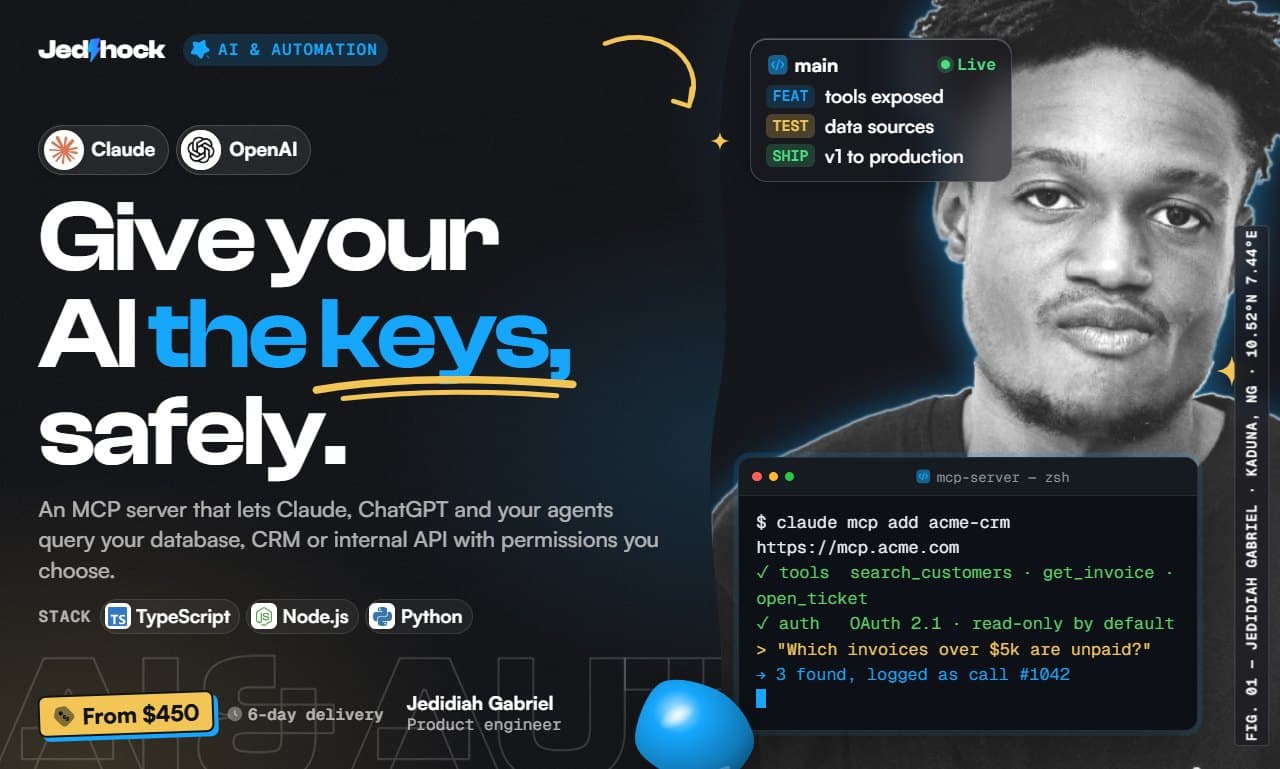
- Custom MCP Server from $450 to let AI assistants read your live catalogue.
Book a free call with your three best-selling products. I'll show you what an AI assistant sees when it looks at them.
Questions, answered
What is agentic commerce?
Shopping where an AI assistant searches, compares and sometimes buys on a customer's behalf. The assistant relies on structured product data, feeds and policies from stores to decide what to recommend.
How do I get my products recommended by ChatGPT?
Publish product pages with structured data for price, availability and brand, keep a current product feed, write delivery and return policies clearly, and make sure AI crawlers aren't blocked. Then check by searching for your products the way a customer would.
What is the Agentic Commerce Protocol?
An open standard developed by OpenAI and Stripe that lets AI agents complete purchases with merchants. It launched alongside ChatGPT's Instant Checkout in 2025.
Ready-made packages 
Fixed-price gigs that build what this proposal describes.
 AI & Automation
Custom MCP Server
I will build a custom MCP server that connects Claude or ChatGPT to your data
 Commerce
Next.js Ecommerce Store
I will build a Next.js ecommerce store with Paystack, Stripe and USDC checkout

 Web & AI Search
AI Search Optimization (GEO + AEO)
I will optimize your website to get cited by ChatGPT, Perplexity and Google AI