 hock
 MANIFESTING YOUR
Tech Solutions
Your Developer Vanished With Your Project? Start Here.
The updates got slower, then stopped. Your messages show two grey ticks. You've paid for most of the project, there's a staging link that half works, and you're not sure whether the code, the domain or the server is in your name. It happens more often than people admit, and it's recoverable more often than it feels.
What should you secure first?
Work through these before anything else, in this order.
- The domain. Log into the registrar where it was bought, whether Namecheap, GoDaddy, Whogohost or another. If it's in the developer's account, contact the registrar with your invoices. Losing the domain is the worst outcome, so start here.
- The code. Ask for access to the repository on GitHub, GitLab or Bitbucket. If there's no repository, ask for a zip of everything. Your contract and invoices are your evidence of ownership.
- Hosting and database. Find out where it's deployed, such as Vercel, AWS, a cPanel host, Firebase or Supabase. Get the logins, or at least a database export.
- Third-party accounts. Payment gateway, email service, app store accounts, Google Cloud, OpenAI keys. Anything billing your card should be in your name.
- A list of what works. Go through the staging site and note what does and doesn't, with screenshots. It makes the next developer's quote faster and more accurate.
Finish, fix or restart?
- Finish when the code is reasonably organised and what's missing is features.
- Fix when it works but has security holes, broken payments or keeps falling over. Many half-finished projects need this before anything new gets built.
- Restart when the code is unreadable or built on something that can't do what you need. It feels wasteful, and it's sometimes the cheapest option.
An independent audit tells you which, and it should come before anyone quotes for "finishing" it.
How to keep it from happening again
Keep everything in your name from day one. Put the code in a repository you own and invite the developer as a collaborator. Ask for a working demo every week that you can click through yourself. Tie payments to delivered milestones.
Built on work I've shipped
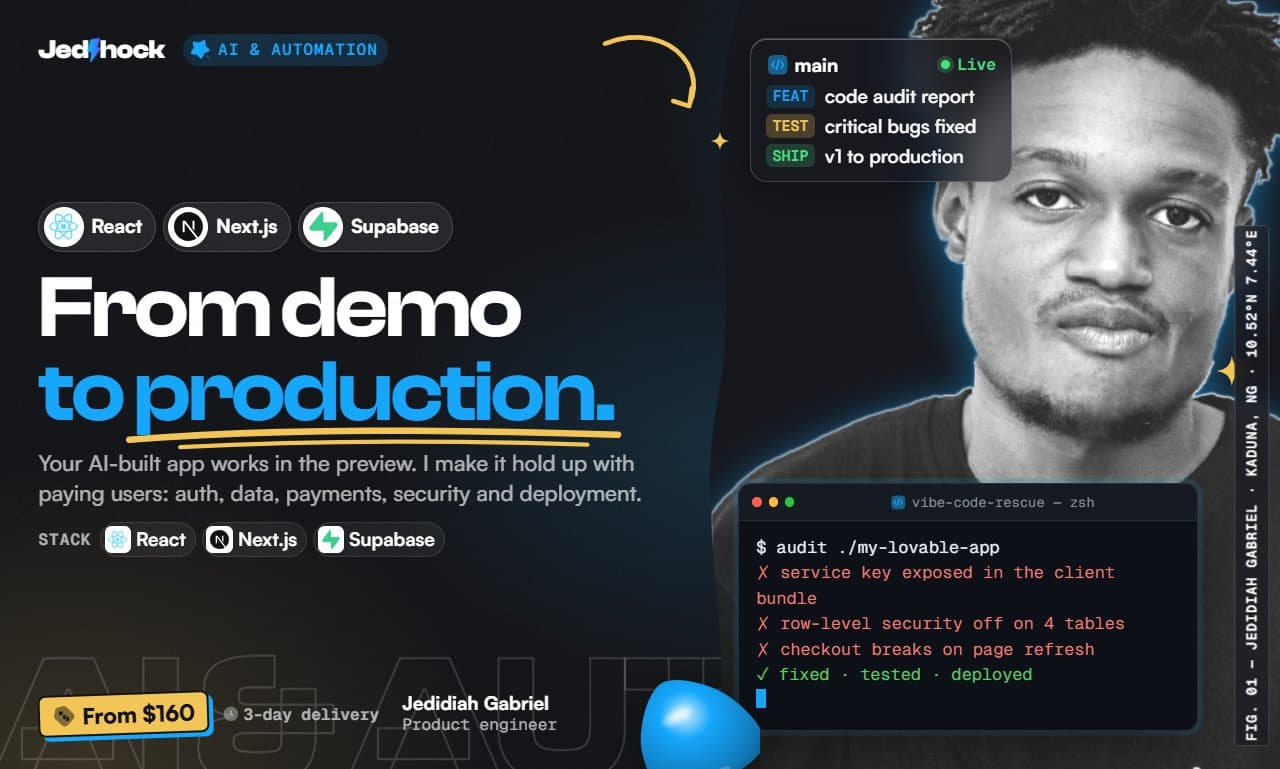
My Vibe-Code Rescue service exists for code that got close and stalled, much of it AI-generated, covering auth, database rules, payments and deployment. More in Vibe-Coded It Over the Weekend? Here's How to Ship It. On every project I build, the code goes to the client's repository and services run on the client's accounts.
What it costs
- Vibe-Code Rescue from $160 for an audit report plus fixes for up to three critical bugs. Security, auth, database and payment fixes with deployment are $480, and a refactor with tests and CI is $1,250.
- Fractional CTO Session at $150 for a 90-minute review and a written plan that says finish, fix or restart, with a cost range.
Recover the access you can, then book a free call. I'll look at what you got back and tell you which of the three it is.
Questions, answered
What do I do if my developer stops responding?
Secure your domain first, then the code repository, hosting, database and any third-party accounts billed to you. Document what works on the staging site. Then get an independent audit before paying anyone to finish it.
Can another developer finish my half-built app?
Often, yes. A developer can review the code and tell you whether to finish it, fix it first or restart. The answer depends on how the code is organised and what it was built with.
How do I protect myself when hiring a freelance developer?
Keep the domain, repository, hosting and third-party accounts in your own name from the start, ask for weekly demos you can test, and pay against delivered milestones.
Ready-made packages 

Fixed-price gigs that build what this proposal describes.