 hock
 MANIFESTING YOUR
Tech Solutions
The Fake Alert Costs More Than the Sale
It's Saturday and the shop is full. A customer shows your cashier a transfer receipt in their banking app. It says "Successful", it has your account name and the right amount. The cashier nods and bags the goods. On Monday, when someone checks the statement, the money isn't there. It never was.
How do fake transfer alerts work?
The receipt is a picture. Websites that generate convincing receipts for PalmPay, OPay, Kuda and the big banks exist, and Sahara Reporters investigated one in September 2026. Some scammers go further and send an SMS that looks like a credit alert. A cashier with a queue can't tell the difference by looking, and shouldn't be asked to.
December makes it worse. Queues are longer, staff are new, and "network is slow, it will reflect" sounds believable because sometimes it's true.
Let the bank confirm the payment
The fix is one rule. Goods leave when your system says the money arrived, and a screenshot never counts. Making that rule work at a busy counter takes three pieces.
- An account number per till or per sale. Paystack, Flutterwave and Monnify can issue virtual accounts. When a transfer lands, the provider tells your system, usually within seconds, with the amount and the sender's name.
- A confirmation the cashier can see. A screen at the till, or a Telegram or WhatsApp message to the cashier's phone, saying "₦45,000 received for Order 1182". No message, no goods.
- A path for slow networks. If a transfer is delayed, the order waits as "awaiting payment" with the customer's phone number, and the system releases it the moment the money lands, even if they've already left.
The part owners skip
Staff fraud hides in the same gap. A fake alert and a "customer" who is the cashier's friend look identical in the end-of-day count. Once every payment is confirmed by the bank and matched to an order, the count reconciles itself, and any gap points to a till and a time.
Built on work I've shipped
WeSelling, my business operating system, ties every sale to inventory and to a confirmed payment, by card or stablecoin. My private Telegram notification service sends staff an instant alert for each order and payment. Open a WeSelling store if you want this without a custom build.
What it costs
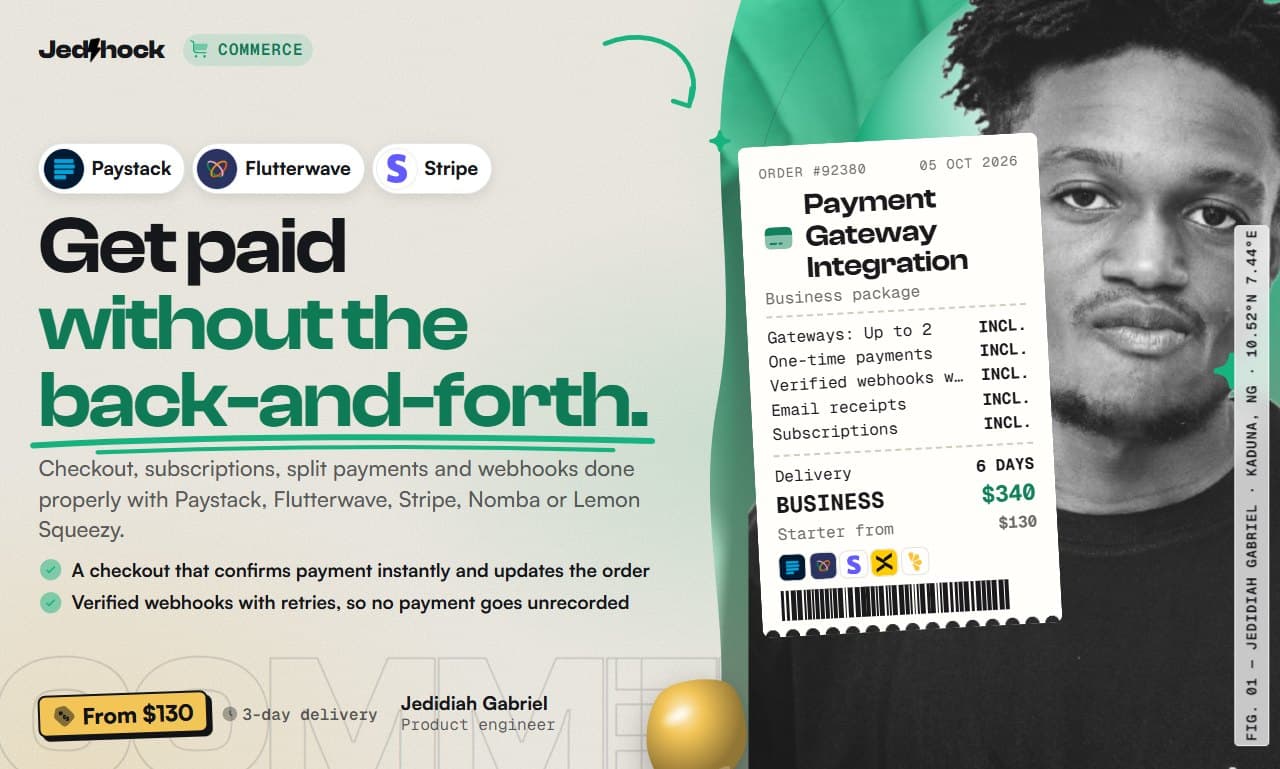
- Payment Gateway Integration from $130 for one gateway with verified webhooks and receipts.
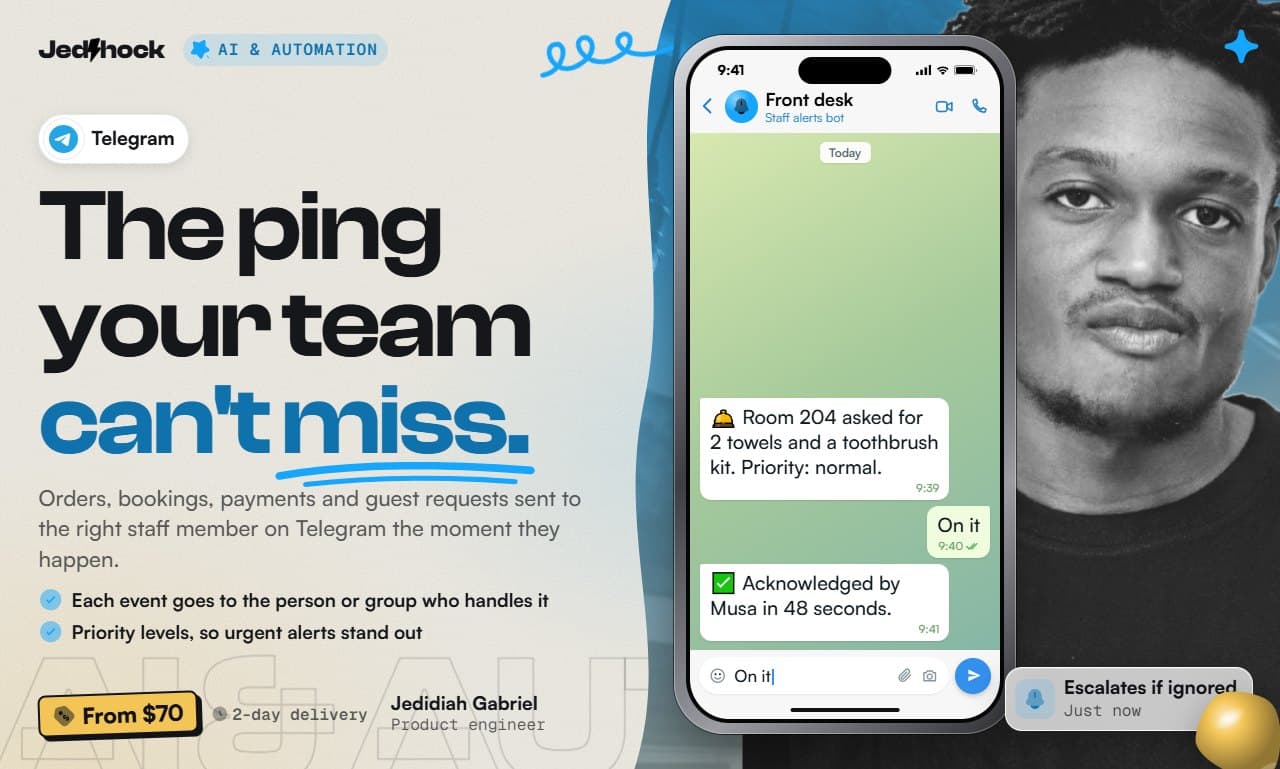
- Telegram Alert Bot from $70 to put "payment received" on the cashier's phone.
- Inventory & Barcode System. The $1,450 package adds a POS screen and stock across branches.
One weekend of fake alerts in December can cost more than the whole setup. Book a free call and tell me how payments are confirmed at your counter today. I'll tell you the quickest way to close the gap before the rush.
Questions, answered
How do I confirm a bank transfer is genuine before releasing goods?
Don't rely on the customer's screen or an SMS. Use a virtual account or payment gateway that notifies your system when the money lands, and release goods only on that confirmation. Paystack, Flutterwave and Monnify all support this.
What is a fake transfer alert?
A forged receipt or SMS that shows a transfer as successful when no money was sent. Receipt generators make them look identical to a banking app, so a visual check at a busy counter won't catch them.
Will payment confirmation slow down my queue?
A gateway confirmation usually arrives within seconds of the transfer. Orders still waiting can be parked with the customer's number and released automatically when the money lands, so the queue keeps moving.
Ready-made packages 

Fixed-price gigs that build what this proposal describes.
 AI & Automation
Telegram Alert Bot
I will build a Telegram alert bot for orders, bookings and service requests

 Commerce
Inventory & Barcode System
I will build an inventory system with barcode scanning and low stock alerts
Commerce
Payment Gateway Integration
I will integrate Paystack, Flutterwave, Stripe or Nomba payments into your app